
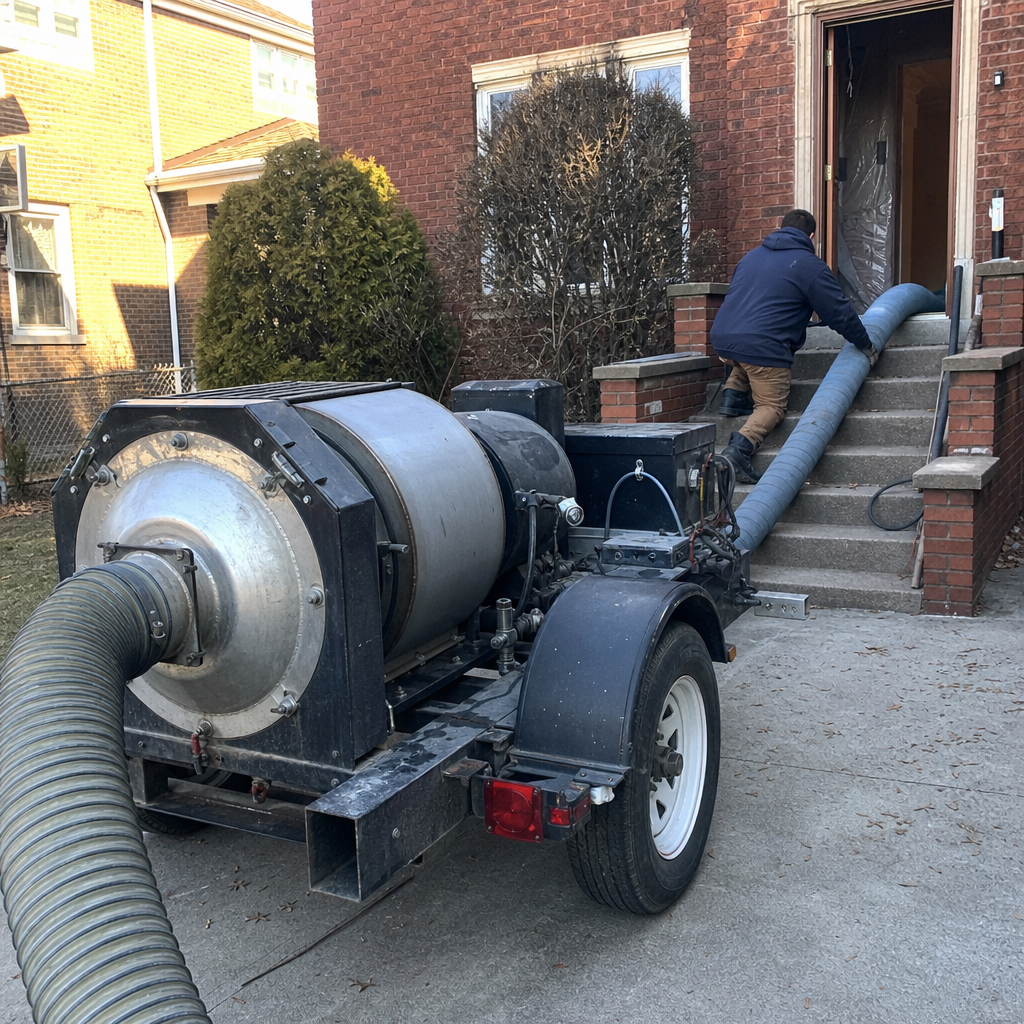
Nikro Vent Sanitizing: The Chicago Owner’s Guide
We stock and install Nikro-compatible vent sanitizing equipment for Chicago homeowners, with most jobs completed same day at an installed price of $340-$620 depending on system size and access. If your vents still smell musty after a standard cleaning, or your Nikro fogger isn’t atomizing solution evenly, the sanitizing module or delivery hose is likely the culprit. Chicago’s hard water and seasonal humidity swings tend to clog Nikro fogger nozzles faster than the manufacturer specs suggest, especially in older bungalows and two-flats with galvanized supply lines.
Which Nikro Models This Applies To
Nikro builds vent sanitizing equipment across several lines, and the parts are not as interchangeable as they look. The SL4000 and SL5000 fogger series use a 1.5-gpm brass nozzle with a 110-volt diaphragm pump, while the portable PS100 and PS200 units run a 12-volt pump with a finer 0.5-gpm plastic nozzle. The label is on the pump housing, not the tank, and the model prefix matters: “SL” units have a metal frame with pneumatic wheels, “PS” units have a plastic cart. We have replaced enough of these in Chicago’s Portage Park, Albany Park, and Edison Park neighborhoods to know the serial number break: SL units built before 2019 use a different hose fitting (3/8-inch NPT) than current production (1/2-inch NPT). If you force the wrong coupling, you will strip the pump threads.
We carry OEM Nikro nozzles, pumps, and hoses, plus quality aftermarket equivalents from the same suppliers that stock Lennox, Trane, and Carrier sanitizing components. Aftermarket saves roughly 15-20% on parts cost and carries the same 90-day coverage under our work guarantee. For a fogger that runs daily in a commercial setting, we usually recommend OEM. For residential use twice a year, aftermarket holds up fine.
Signs Your Nikro Vent Sanitizing Is Failing
- Uneven mist or dripping from the nozzle. The orifice is probably scaled from Chicago’s mineral-heavy lake water, or the ceramic tip has cracked from thermal shock when a cold garage meets a hot pump. We see this most in winter, when homeowners store the unit in an unheated basement and run it straight into a warm duct system.
- Pump runs but pressure gauge reads zero. The diaphragm inside the pump has torn, or the bypass valve is stuck open with dried sanitizing residue. Nikro diaphragms are replaceable, but you need to match the pump housing code stamped near the electrical connection.
- Solution leaks from hose fittings during pressurization. The barbed fittings fatigue over time, especially if the hose gets kinked around tight corners in Chicago’s cramped utility closets. We stock reinforced braided hose that resists the sharp bends better than Nikro’s standard vinyl.
- Motor hums but does not prime. The inlet strainer is clogged with crystallized sanitizer, or the impeller vanes have corroded. This happens when the unit sits unused for months with solution left in the tank, a common mistake after fall duct cleaning season.
- Burning electrical smell from the motor housing. The capacitor is failing or the motor windings are overheating from running dry. This is the point where continued use risks motor replacement rather than just a pump rebuild.
Replacement Cost & What’s Included
| Service | Price Range | What’s Included |
|---|---|---|
| Nikro nozzle replacement (OEM) | $85-$140 | Part, removal of scale deposits, flow test, 90-day guarantee |
| Pump diaphragm or rebuild | $180-$290 | Rebuild kit or replacement pump, pressure calibration, leak check |
| Full hose and fitting replacement | $220-$380 | Braided hose, brass fittings, routing to avoid kinks, pressure test |
| Complete sanitizing module swap | $340-$620 | New or rebuilt pump, nozzle, hose, electrical check, before/after camera documentation |
The range depends on access: a fogger sitting on an open basement floor in a Lincoln Park greystone takes half the time of one wedged behind a furnace in a Humboldt Park crawl space. We show you the exact price before touching a tool. The 90-Day Done Right Promise covers all of it - if the pressure drops or the mist pattern changes, we return at no charge, no paperwork required.
DIY or Call Us?
There is safe checking, and there is work that belongs to someone who has done it before.
You can safely: drain and flush the tank with clean water, inspect the inlet strainer for debris, and check that the power cord ground pin is intact. These three things solve about 30% of the calls we get.
Where DIY goes wrong: the pump diaphragm sits behind a housing torqued to 45 lb-ft, and without a torque wrench you will either strip the threads or leave a leak path. The nozzle orifice is ceramic and cracks if you grip it with standard pliers. More importantly, the sanitizing chemicals in these systems are lung and eye irritants at pressure; we wear full-face respirators for a reason. If the pump has been run dry, the motor housing may have damaged grounding that a multimeter will not catch without load testing.
We have been doing this long enough to know what clean looks like - and we do not leave until it gets there. Ray Dempsey and our technicians carry the full range of Nikro-compatible parts on the truck, and most repairs finish in a single visit. Call (877) 502-3903 for a free estimate and we will tell you whether it is a five-minute strainer cleaning or a full module rebuild before we schedule.
FAQs
In Chicago’s climate, a residential Nikro fogger used twice yearly typically lasts 7-10 years before major pump work, though hard water can cut that to 5-7 years if the unit is never flushed. Commercial units running monthly often need diaphragm replacement at year 3 or 4. Call (877) 502-3903 and we will assess whether yours has life left or is due for rebuild.
Yes, in most cases. Pump rebuilds, nozzle swaps, and hose replacements solve the problem without replacing the entire cart or tank assembly. We only recommend full replacement when the motor windings are burned or the frame is corroded from chemical spillage. We will show you the camera footage of what we found so you can decide.
Most residential repairs take 45-90 minutes from truck arrival to pressure test. A full module replacement in a tight mechanical room may run two hours. We complete 90% of these jobs in a single visit because we stock the parts.
We stock OEM and aftermarket nozzles, diaphragm kits, hoses, and pumps for the SL and PS series on every service vehicle. If you have an older or commercial-grade Nikro unit, call ahead with the model and serial number and we will confirm the part before dispatching. Estimates are free: (877) 502-3903.
Written by Ray Dempsey, Owner, Bellows Air Duct & Vent Co. of Chicago at Bellows Air Duct & Vent Co. of Chicago, serving Chicago and nearby areas.