
Rotobrush Air Duct Cleaning in Chicago: A Homeowner’s Guide
Rotobrush air duct cleaning in Chicago typically costs $300-$600 for a full residential system and uses a spinning brush attached to a vacuum hose to physically scrub debris from duct walls. It’s effective for certain duct types, but the wrong application in Chicago’s older homes can damage galvanized steel, tear flex-duct, or shred deteriorated fibrous liner. If you’d rather not sort out whether your system is a candidate, call Bellows Air Duct & Vent Co. of Chicago at (877) 502-3903 - we’ll camera-inspect first and tell you honestly if rotary brushing is the right approach.
A rotary brush moving at the wrong speed inside a flex-duct elbow can tear a hole you won’t discover until your energy bill climbs $80 a month - and no coupon covers that repair. We’ve been called out to homes in Portage Park and Austin where a discount “whole-house special” left ducts more compromised than when they started. The machine itself isn’t the problem. An untrained operator with a shiny tool and a quota to hit is the problem.
What Rotobrush Actually Does (And What It Doesn’t)
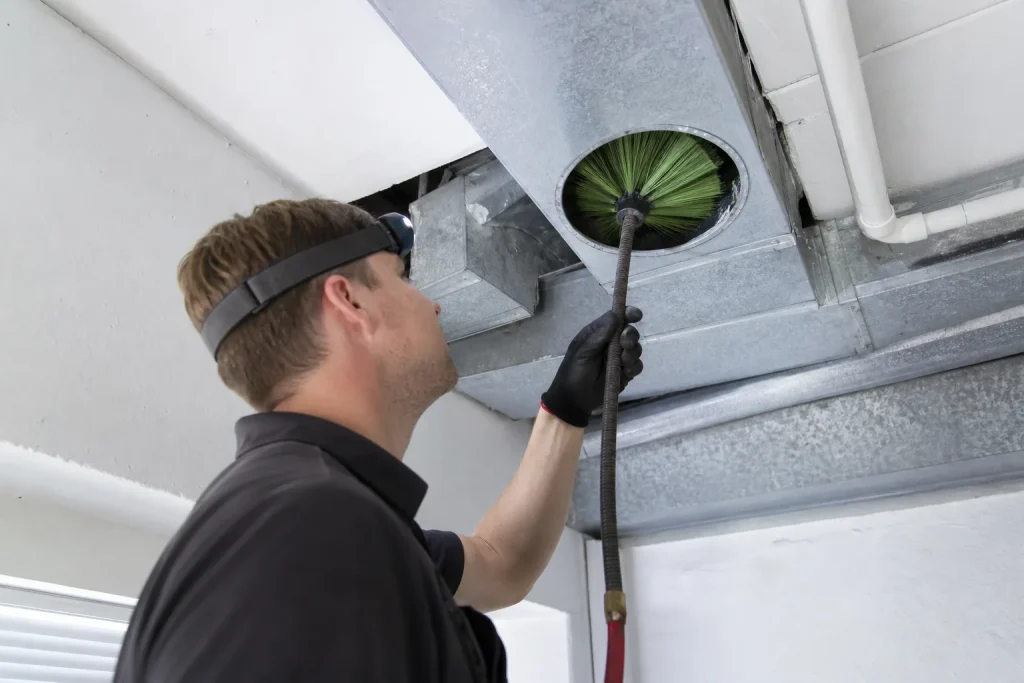
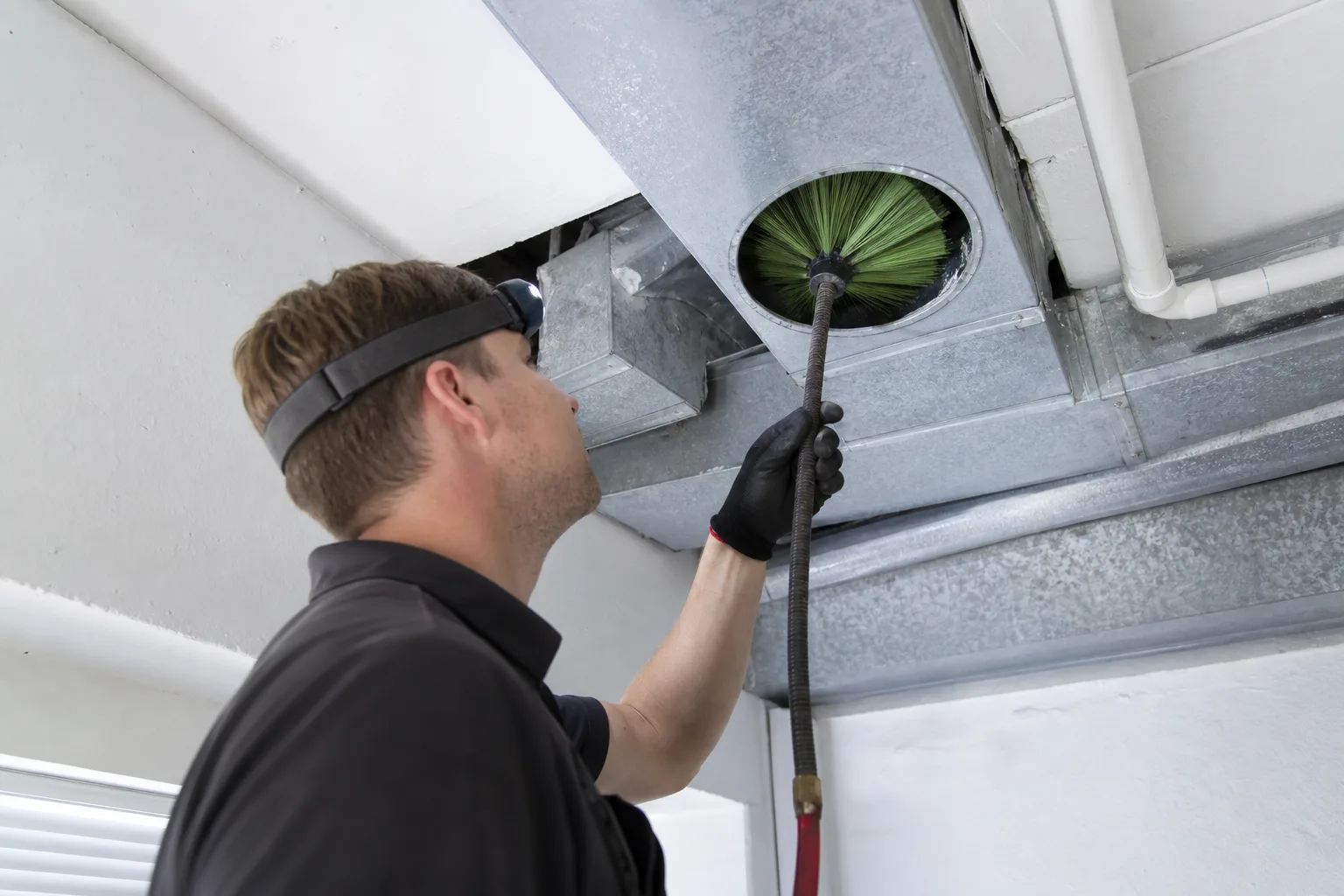
Rotobrush is a contact-cleaning method. A cylindrical brush spins at controlled RPM while a vacuum port draws loosened debris back through the hose. The brush makes physical contact with the duct interior, which is why it works well on smooth metal or PVC ducting with accessible straight runs.
What gets misrepresented in discount advertising is the distinction between contact cleaning and agitation-only methods. Some Chicago operators run a rotary brush through a system without proper vacuum extraction, essentially stirring debris into the airstream. Others use the tool on duct types it was never designed for. The Rotobrush machine doesn’t know what kind of duct it’s in. The technician has to know, and has to care enough to stop when the tool is wrong for the job.
We’ve found the Rotobrush system from Abatement Technologies effective when matched to appropriate ductwork, particularly in post-1990 Chicago homes with smooth metal mains and accessible basement runs. But we pair it with compressed-air whipping and manual contact vacuuming on older systems where rotary brushing risks damage.
Key distinctions homeowners should ask about:
- Is vacuum extraction continuous during brushing, or is the brush run first and vacuumed separately?
- What RPM setting will you use, and how do you determine it?
- Will you camera-inspect before selecting the cleaning method?
- What happens if you encounter flex-duct or damaged liner?
Why Chicago’s Older Housing Stock Changes Everything
Chicago’s pre-1980 housing stock presents conditions that make blind rotary brushing genuinely risky. In neighborhoods like Logan Square, Humboldt Park, and the bungalow belts of Archer Heights and Chatham, we regularly encounter:
- Galvanized steel ductwork with internal corrosion and flaking zinc coating that a brush can dislodge in sheets
- Fibrous glass duct liner from 1960s-1970s installations that degrades to the touch and tears under rotary contact
- Transite (asbestos-cement) vent pipes in homes built before 1980 that must never be mechanically disturbed
- Original flex-duct additions from 1980s retrofits, now brittle, with elbows too tight for brush passage
The Chicago climate compounds these issues. Summer humidity swells any organic debris into a cohesive mass; winter contraction stress cracks older metal seams. A duct that looked sound in September may have developed a new gap by February. Without a camera inspection, you’re guessing. We’ve been serving Chicago homeowners since 2013, and we’ve learned that guessing with a spinning power tool in someone’s walls is not how you build a 42-year reputation.
This is why air duct cleaning in Chicago should always start with visual verification, not a sales pitch.
Where Rotobrush Excels - And Where It Doesn’t
Rotobrush performs well in specific configurations common to certain Chicago home types. We use it selectively in:
- Ranch-style homes with straight basement trunk lines and smooth metal construction
- Newer construction (1990+) with rigid metal or PVC ducting and accessible cleanouts
- Commercial applications with exposed spiral duct and minimal directional changes
We avoid or modify the approach in:
- Any system with flex-duct elbows under 90 degrees
- Galvanized steel with visible internal corrosion or flaking
- Ducts with fibrous liner showing discoloration, compression, or surface damage
- Systems where camera inspection reveals previous damage or amateur repairs
In these cases, compressed-air methods with proper containment, or manual contact vacuuming with Honeywell-spec HEPA filtration, achieve thorough cleaning without the mechanical risk. The goal is debris removal, not tool deployment. The tool serves the job; the job doesn’t serve the tool.
Camera Verification: The Non-Negotiable Step
Camera inspection before and after cleaning is the only way to confirm that debris was actually removed rather than redistributed. We’ve cleaned systems in Chicago where the “after” camera revealed brush bristles wedged in a duct joint, or where a previous operator had simply pushed a decade of dust past a damper into a bedroom branch.
Our process at Bellows is consistent on every job: camera before to assess duct condition and select the right method; camera after to document that the method worked. The homeowner sees the footage. There’s no claim without proof, no “trust us” without the image to back it. This is the standard we apply whether we’re doing HVAC cleaning in Chicago or a simple dryer vent service.
Red flags in a Rotobrush service quote - what honest job descriptions include that bait-and-switch operators omit:
| Honest Quote Includes | Bait-and-Switch Quote Omits |
|---|---|
| Camera inspection before method selection | “Whole house special” with no inspection mentioned |
| Specific duct types to be cleaned and excluded | Vague “all ducts” language |
| RPM range and vacuum CFM ratings | No technical specifications |
| Contingency for damaged or incompatible ductwork | No mention of what happens if brushing isn’t appropriate |
| Written guarantee with return terms | Verbal promises, no written recourse |
If a quote won’t put the scope in writing, the scope will change at your door.
Reading a Rotobrush Quote: What the Fine Print Hides
The discount air duct cleaning model in Chicago often works like this: advertise a low entry price, arrive with a Rotobrush machine, discover “unexpected conditions,” and upsell by 300-500% before work begins. The homeowner feels trapped - they’ve taken time off work, the technician is in their basement, and the original price was never realistic for the actual scope.
We don’t operate this way. Our no-hassle upfront pricing is disclosed before a single tool is lifted. The number on the phone is the number on the invoice. This isn’t a marketing angle; it’s how we’ve done business since 1984, and it’s why we don’t need to be called back.
When evaluating any Rotobrush service in Chicago, ask these questions directly:
- Will you camera-inspect before quoting the final price?
- What specific equipment will you use, and is it sized for my system’s dimensions?
- What happens if you find flex-duct, damaged liner, or asbestos-cement pipe?
- Is your pricing all-inclusive, or are there per-register, per-vent, or “contamination” surcharges?
- What does your guarantee cover, and how do I invoke it if I’m not satisfied?
A company that hesitates on any of these points is not selling you a service. They’re selling you an appointment that becomes a negotiation.
When to Call a Professional
If your Chicago home was built before 1980, if you’ve never had your ducts camera-inspected, or if you’re responding to visible dust accumulation, musty odors, or uneven heating, don’t start with a cleaning appointment. Start with an inspection that determines whether cleaning is appropriate and what method is safest. Call (877) 502-3903 for a free estimate - we’ll show you what your ducts actually look like before we recommend anything.
Related services in Chicago: Dryer Vent Cleaning in Chicago - often needed in the same visit, and equally critical for fire safety in older housing stock.
The Bottom Line
Rotobrush is a legitimate tool with legitimate applications in Chicago homes, but it’s not a universal solution. The machine’s effectiveness depends entirely on operator judgment, duct compatibility, and verification that the job was done rather than performed. In Chicago’s diverse and aging housing stock, that judgment matters more than the brand name on the equipment.
Key takeaways:
- Rotobrush requires physical contact with duct walls - know what those walls are made of before the brush spins
- Chicago’s pre-1980 homes often contain duct materials that rotary brushing can damage
- Camera inspection before method selection is essential, not optional
- Camera verification after cleaning is the only proof that debris was removed, not redistributed
- Honest quotes specify scope, equipment, contingencies, and guarantee terms in writing
If you’re in Chicago and need help assessing whether Rotobrush cleaning is right for your home, Bellows Air Duct & Vent Co. of Chicago offers free estimates with camera inspection - call (877) 502-3903. We’ll show you what you’re dealing with and give you a square deal: one honest price, shown before we start, backed by our 90-Day Done Right Promise in writing.
Frequently Asked Questions
Rotobrush air duct cleaning in Chicago typically runs $300-$600 for a complete residential system, depending on duct accessibility, number of vents, and whether the system requires pre-cleaning repairs. Bait-and-switch operators may quote $89-$149 to get in the door, then add surcharges that push the final bill past $800. Call (877) 502-3903 for an exact quote - our estimates are free and our pricing is disclosed upfront before work begins.
Rotobrush cleaning can be safe for Chicago bungalows built after 1980 with smooth metal ductwork, but many bungalows in neighborhoods like Berwyn, Cicero, and the Southwest Side have galvanized steel from the 1920s-1950s with internal corrosion or early flex-duct additions that rotary brushing can damage. A camera inspection is essential to determine safety before any mechanical cleaning begins.
The only reliable verification is camera footage showing the same duct sections before and after cleaning. Debris removal should be visible, not assumed. At Bellows, we provide this documentation on every job. If your previous cleaner didn’t offer video evidence, you have no way to confirm the service was performed as described.
Rotobrush cleaning can improve HVAC efficiency in Chicago homes where duct blockage has restricted airflow, but the improvement is typically modest - 5-15% in documented cases - and depends on sealing leaks and proper balancing afterward. The bigger risk is that improper brushing creates leaks that increase energy costs. Camera-verified intact ducts matter more than marginal efficiency gains from cleaning alone.
Written by the team at Bellows Air Duct & Vent Co. of Chicago, serving Chicago since 2013.
Need Air Duct Cleaning Help?
Call Bellows Air Duct & Vent Co. of Chicago - licensed & insured, here with fast after-hours help in Chicago.
(877) 502-3903