
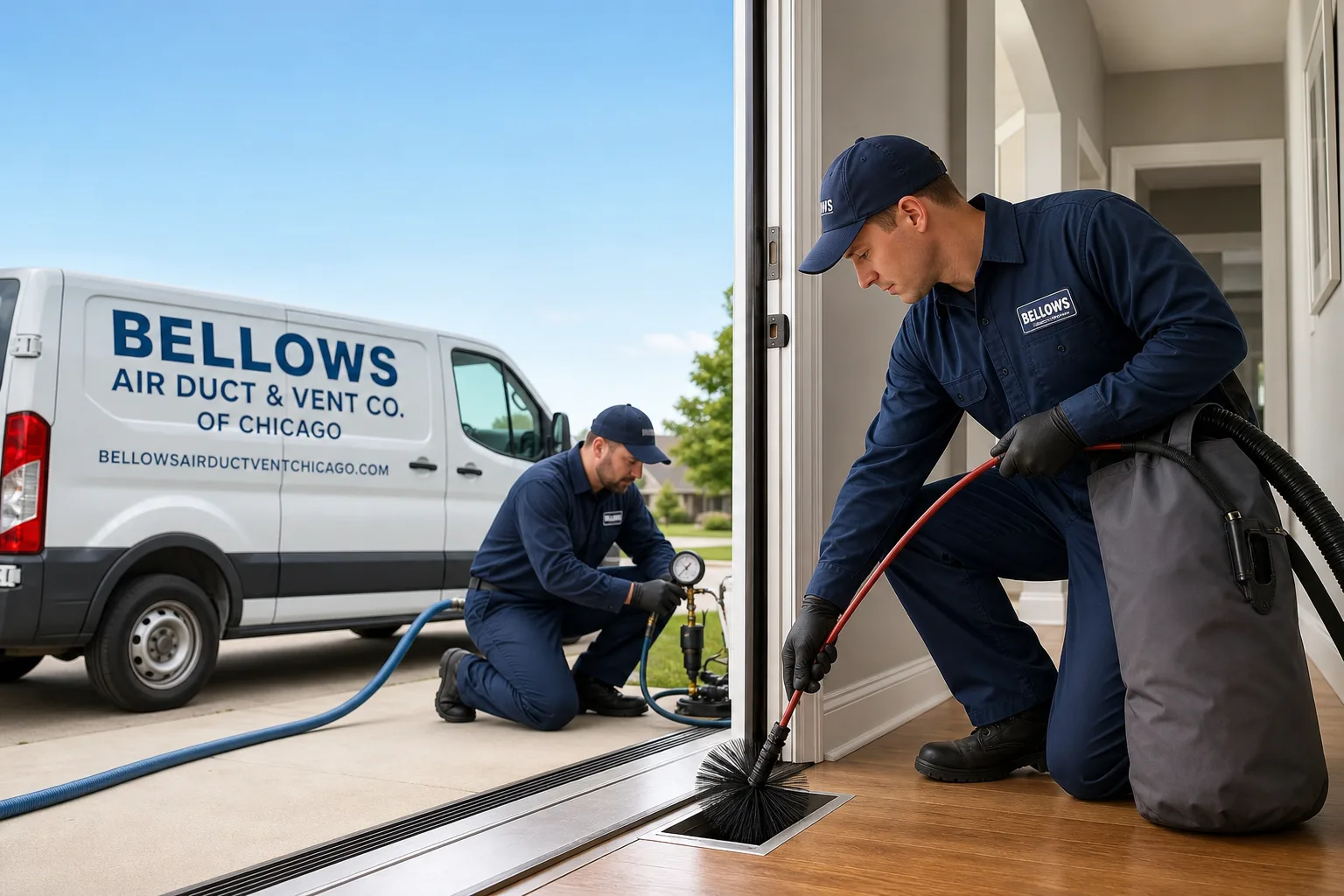
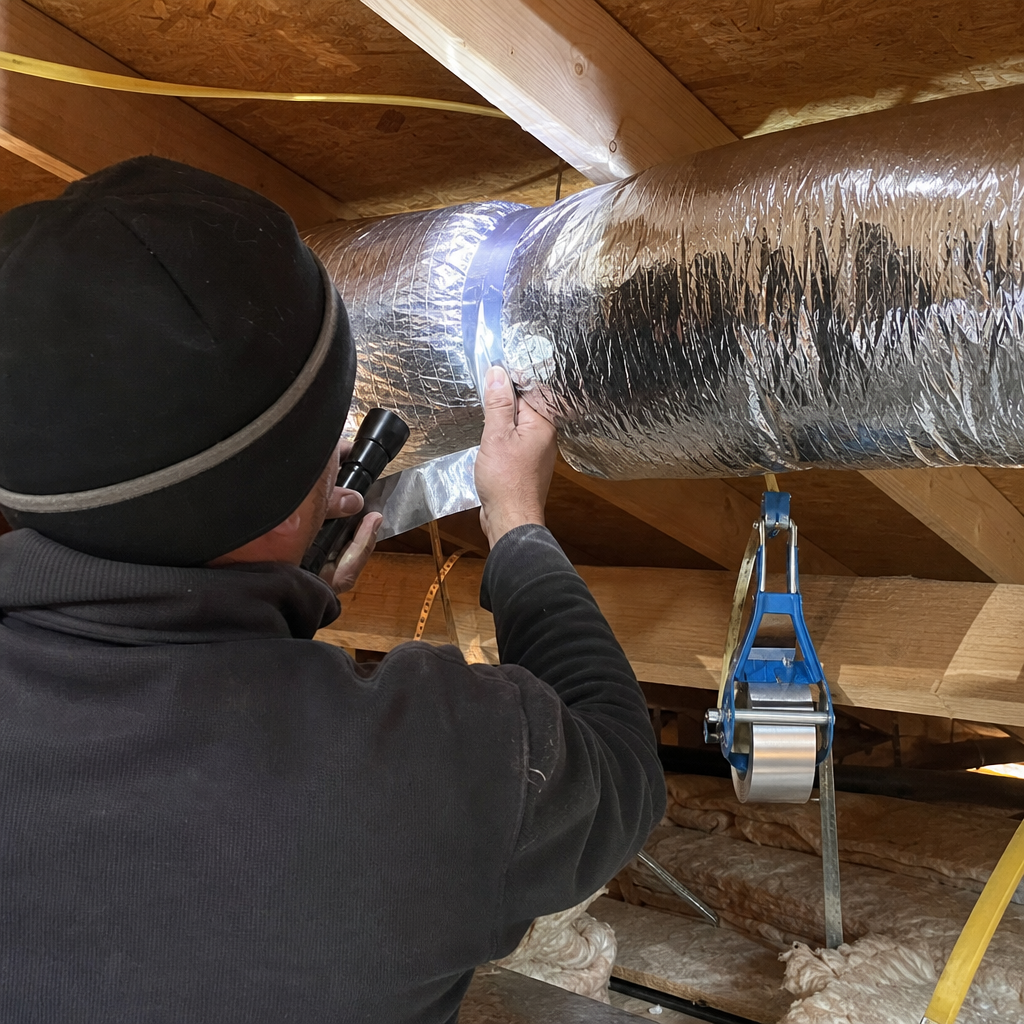
Fast, Reliable Air Quality & Sanitizing Across Chicago Loop
Air quality sanitizing in Chicago Loop commercial buildings typically runs $450-$1,200 for standard ductwork treatment and $1,800-$3,500 for full-system UV and filtration upgrades in high-rise units. Most Chicago Loop jobs are scheduled within 24-48 hours, with emergency response available for buildings experiencing acute contamination events. Call (877) 502-3903 for upfront pricing and a free estimate - we’ll be there when we say.
We’ve worked the Chicago Loop for over four decades. Our technicians know the difference between a building on Wabash, where the ‘L’ rattles past the intake louvers every three minutes, and one on Dearborn, where the air handler draws from a sheltered courtyard. That local knowledge changes how we approach every job. We’re not driving in from the suburbs guessing at your setup. We know which Loop buildings have original 1950s sheet-metal trunk lines, which ones got retrofitted in the ’80s with fiberglassboard duct, and which addresses still pull combustion air through shafts that haven’t been opened since the first Bush administration.
Why Bellows Air Duct & Vent Co. of Chicago Is Chicago Loop’s Preferred Air Quality & Sanitizing Company
Chicago Loop building managers and property engineers know our trucks. We’ve cleaned and sanitized ductwork in the Monadnock Building, serviced air handlers in the Marquette Building, and treated microbial contamination in half a dozen River North-adjacent Loop high-rises where the humidity hits different in July. Our reputation here was built job by job, not bought with coupons.
We answer the phone live, 24 hours a day. Not an app. Not a callback queue. A real person at our Chicago office who knows the Loop and can dispatch a background-checked, uniformed technician with the right equipment for your building’s specific contamination profile. Most Chicago Loop jobs finish in a single visit.
Our 90-Day Done Right Promise applies to every Loop address we serve. If the sanitizing treatment doesn’t hold, if odors return, if testing shows we missed something - we come back at no charge. No paperwork to file. No argument. We stand behind it because we’ve stood behind our work since 2012.
Our Air Quality & Sanitizing Services in Chicago Loop
Mold Treatment
Chicago Loop buildings face a specific mold risk that suburban properties don’t: the ‘L’ train structure creates microclimates of trapped humidity against building façades, especially along Lake Street and Van Buren where the tracks run closest to intake vents. Combine that with Chicago’s summer dew points in the 70s and original ductwork that was never designed for dehumidification, and you’ve got conditions for Cladosporium and Aspergillus colonization in return plenums. Our mold treatment in Chicago Loop starts with lab-verified sampling, not guesswork. We treat with EPA-registered antimicrobial agents and apply corrosion-resistant coatings formulated for the unique chemical environment of Loop ductwork - the brake dust and urban humidity mix that standard products weren’t designed for.
Bacteria Sanitizing
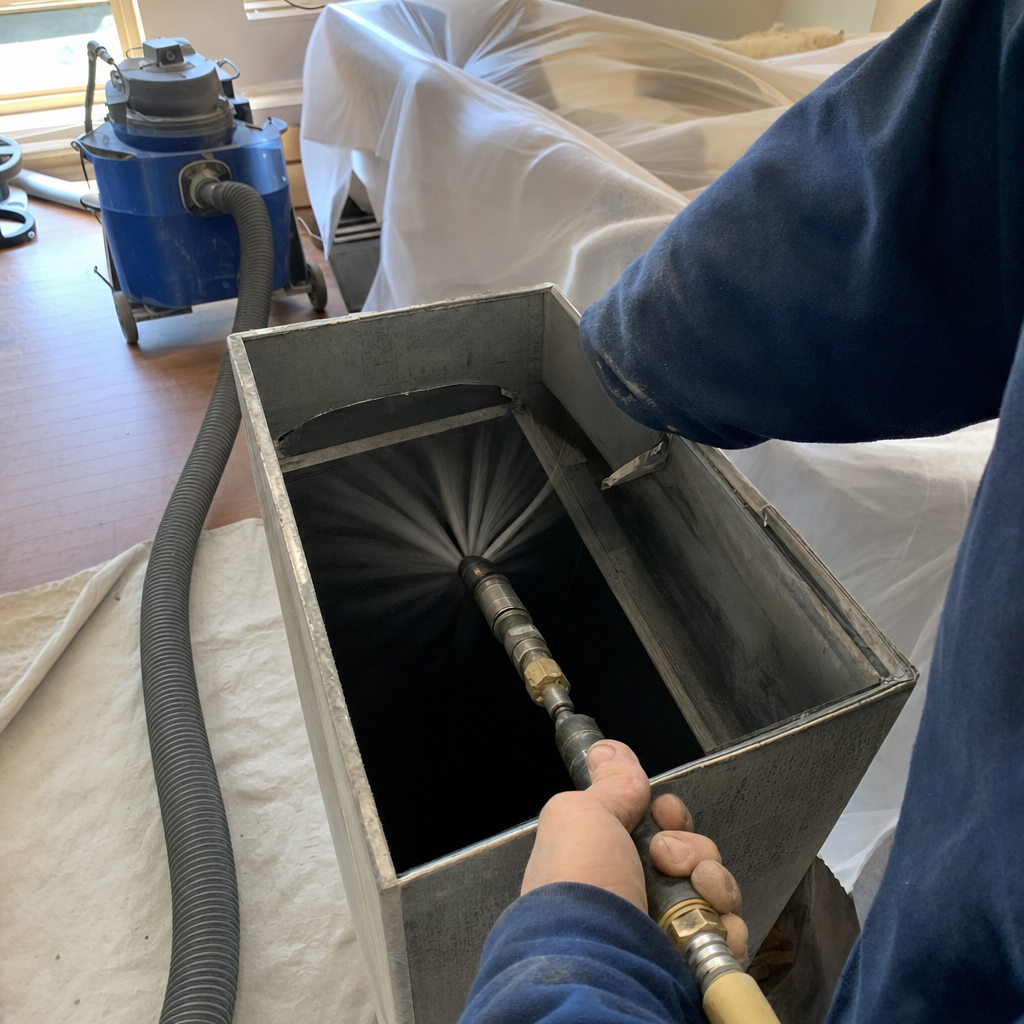
We serviced a 1920s high-rise on Wabash Avenue where the return plenum had accumulated a ferrous sludge layer from decades of ‘L’ train emissions. Using our Rotobrush system with specialized magnetic pre-filters, we extracted over 40 pounds of metallic particulates and restored the building’s ventilation to design specifications. That kind of contamination isn’t just dirty - it’s abrasive. It destroys bearings, fouls heat exchangers, and creates a nutrient bed for bacterial biofilms. Our bacteria sanitizing in Chicago Loop uses hospital-grade disinfectants applied as a fog that penetrates the full duct cross-section, not just a surface wipe. We verify with post-treatment sampling. Done right - and backed in writing for 90 days.
Odor Removal
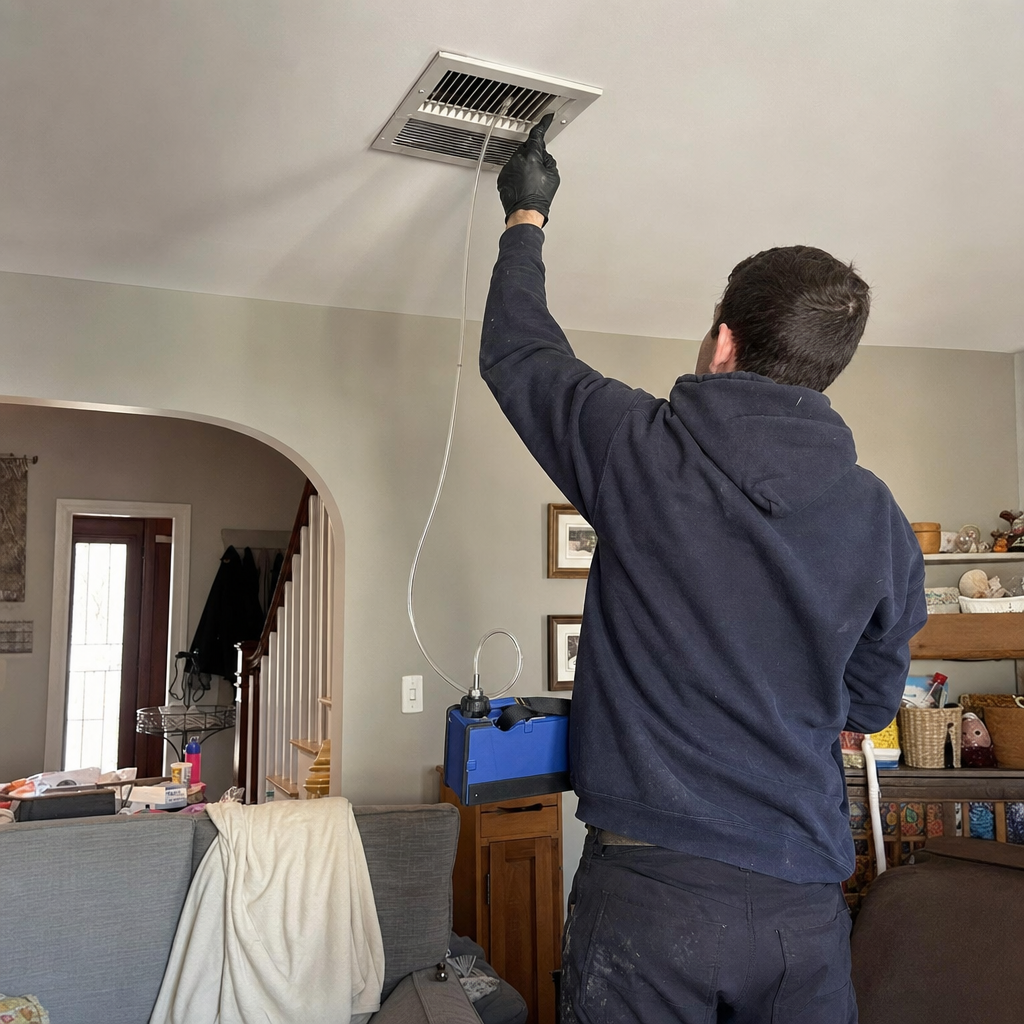
Loop buildings get odors from sources other neighborhoods never see. The graphite dust from ‘L’ train brake shoes has a distinct metallic, oily smell that building engineers describe as “like a machine shop” - and it recirculates through standard HVAC filters that weren’t spec’d for particulates that fine. Add decades of cooking grease from ground-floor restaurants drawn into makeup air units, plus the mustiness of ductwork that hasn’t been opened since the building was converted to condos in 2005, and you’ve got a signature Chicago Loop odor profile. Our odor removal targets the source: source extraction of contaminated material, oxidation treatment for organic residues, and activated carbon filtration where the system design allows. We don’t mask smells. We remove what causes them.
UV Light Installation
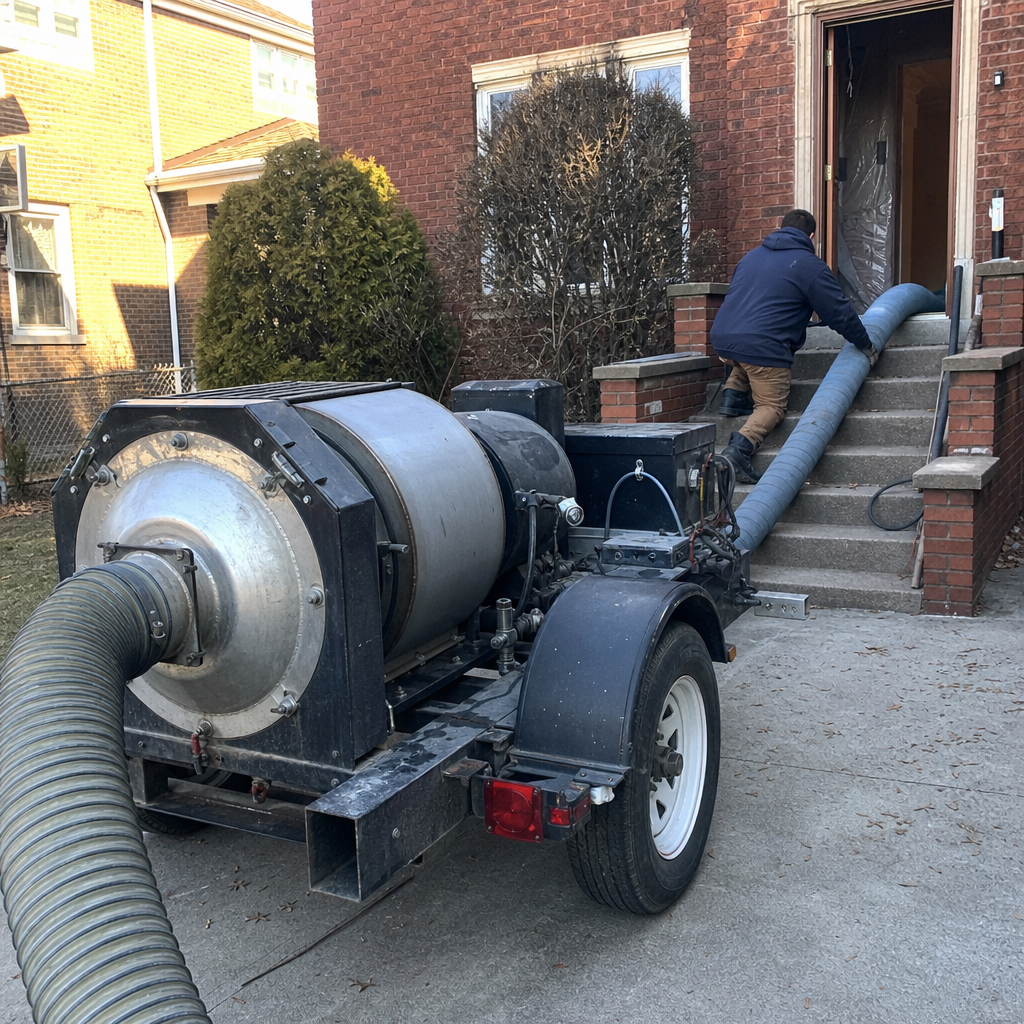
UV-C light installation in Chicago Loop high-rises requires a different approach than residential split systems. The large central air handlers in Loop buildings - many of them original Carrier or Trane units from the 1960s and ’70s - have coil banks and drain pans that stay wet six months a year. That constant moisture, combined with the particulate load from ‘L’-adjacent intakes, creates ideal conditions for microbial growth that standard cleaning can’t stay ahead of. We install Honeywell and Aprilaire UV-C systems sized for commercial tonnage, with lamps positioned for direct line-of-sight to the coil face and drain pan. In Chicago Loop’s climate, with systems running near-continuously through both heating and cooling seasons, UV is maintenance, not luxury.
Allergen Reduction
The allergen load in Chicago Loop buildings isn’t just pollen and pet dander. It’s the fine particulate from diesel locomotives switching in the nearby rail yards, the brake dust that penetrates standard MERV-8 filters, and the fragmented insect and rodent debris that accumulates in ductwork that predates modern sealing standards. Our allergen reduction protocol for Chicago Loop includes HEPA-source containment during cleaning, magnetic pre-filtration for ferrous particulates, and post-treatment verification with particle counters. We specify filter upgrades where the system can handle the static pressure - often a challenge in older Loop buildings with undersized return paths.
What happens when you call
- 1
A real person answersNo phone trees - you reach a local pro.
- 2
You get an upfront price rangeHonest numbers before anyone is dispatched.
- 3
A background-checked tech heads outLicensed & insured, dispatched right away.
- 4
You approve before work beginsNothing starts until you say go.
Trusted Brands We Service in Chicago Loop
We stock parts and equipment from Honeywell, Aprilaire, and Nikro for our Chicago Loop customers - brands that commercial HVAC contractors have specified for decades because they survive in real buildings, not just on paper. Honeywell’s commercial UV systems and Aprilaire’s media air cleaners are workhorses in the Loop’s aging infrastructure. Nikro’s HEPA-negative air machines are what we deploy for containment in occupied buildings where tenants are working one floor below. We don’t show up with residential-grade equipment and hope it scales. We bring what’s right for your building’s tonnage, duct dimensions, and occupancy schedule. That means faster turnaround, fewer return trips, and a job that stays done.
Common Air Quality & Sanitizing Problems We See in Chicago Loop Homes
- Ferrous particulate buildup near ‘L’-adjacent intakes. Neglecting to test for this leaves abrasive duct accumulations that damage HVAC components. We’ve replaced blower wheels in Loop buildings that were worn to imbalance by steel dust acting like sandpaper - a failure mode that doesn’t exist west of the Kennedy.
- Graphite brake shoe dust recirculation. Standard cleaning methods fail to capture this fine particulate, allowing recirculation of material the EPA classifies as carcinogenic. Buildings on Wells and Wabash show the highest levels; our magnetic pre-filtration was developed specifically for this Chicago Loop condition.
- Corrosion from the brake dust-humidity cocktail. The unique chemical mix of ferrous particulates and Chicago’s summer humidity accelerates duct corrosion in ways that plain rust doesn’t. We apply specialized corrosion-resistant coatings after sanitizing - a step unnecessary in Oak Park or Evanston but standard practice for our Chicago Loop work.
- Original ductwork never cleaned since installation. The Loop’s 1890s-to-1970s building stock frequently contains ductwork that has operated for 30, 50, or 80 years without internal inspection. The first time we cut into a return plenum and the building engineer sees what’s inside, the conversation changes from “do we need this?” to “how soon can you start?”
Pricing for Air Quality & Sanitizing in Chicago Loop, IL
| Service | Typical Range in Chicago Loop |
|---|---|
| Bacteria sanitizing, per air handler | $450-$850 |
| Mold treatment with lab verification | $800-$1,600 |
| Odor removal protocol (source extraction + oxidation) | $650-$1,200 |
| UV-C light installation, commercial coil mount | $1,200-$2,400 |
| Full-system allergen reduction with HEPA containment | $1,800-$3,500 |
| Ferrous particulate remediation (‘L’-adjacent buildings) | $950-$1,800 |
What moves you within these ranges? Building height affects access cost - a rooftop unit on a 40-story Loop tower takes longer to reach than a basement mechanical room. Duct accessibility matters: original Chicago School buildings with ornamental plaster ceilings require more careful containment than dropped-tile modern spaces. And the contamination profile itself - a routine sanitizing versus a heavy ferrous sludge remediation - changes labor and disposal requirements. We disclose your exact price before we start. The number we give on the phone is the number on the invoice. No bait coupons, no price changes at the door. Call (877) 502-3903 for a free estimate - we’ll inspect with our camera, show you what we find, and give you one honest price.
Standing offers: $50 Off Any Repair Over $250 | Free Second Opinion on Any Written Estimate | $89 Seasonal Tune-Up | Permanent 5% Senior and Veteran discount.
We Also Serve Cities Near Chicago Loop
Our Air Quality & Sanitizing in Chicago Loop team also responds to buildings in Near South Side, Near North Side, Chicago proper, and West Town. The contamination profiles differ - West Town’s residential stock doesn’t face the ‘L’ brake dust load, Near North’s newer high-rises have different duct configurations - and we adjust our protocols accordingly. Same upfront pricing, same 90-Day Done Right Promise, same live person answering the phone at (877) 502-3903.
Serving Chicago Loop, IL - Our Local Coverage Area
We’re based in the Chicago Loop area and know this community well. Use the map below to see our service coverage - if you’re nearby, we can almost certainly help.
FAQs - Air Quality & Sanitizing in Chicago Loop
It introduces a sustained load of ferrous particulates, graphite dust, and combustion byproducts directly into HVAC intakes at second-to-third-story height - a structural feature of the Loop that doesn’t exist elsewhere in Chicago. Over years, this material accumulates in ductwork as an abrasive sludge that damages equipment, supports microbial growth, and recirculates fine particulates that standard filtration misses. Buildings on Wabash, Wells, Lake, and Van Buren show measurably heavier contamination than properties just outside the elevated rail perimeter. Call (877) 502-3903 for a contamination assessment - estimates are free.
Yes - original ductwork in Chicago Loop buildings, much of it installed between 1890 and 1970, was never designed for the particulate loads these systems now face. The combination of ‘L’ train emissions, decades of deferred maintenance, and Chicago’s extreme temperature swings forcing near-continuous operation creates conditions that simple filter changes cannot address. We’ve cleaned Loop ductwork that hadn’t been opened since the Eisenhower administration. The material inside wasn’t just dust; it was compacted debris with measurable bacterial and fungal loads. Sanitizing isn’t optional maintenance in these buildings - it’s corrective action for accumulated neglect. Call for a camera inspection and we’ll show you exactly what your system contains.
Yes, UV-C light is particularly effective in Chicago Loop high-rises because the large central air handlers run so frequently - heating season stretches from October through April, cooling from May into September, with shoulder months that still require ventilation. That near-continuous operation keeps coils and drain pans moist, creating ideal conditions for mold and bacterial biofilms. UV-C lamps positioned at the coil face and drain pan destroy microbial growth before it can colonize and distribute through the building. In Loop buildings with original ductwork that can’t be fully replaced, UV is often the most practical long-term control measure. We size and install Honeywell and Aprilaire commercial UV systems for your specific tonnage and coil configuration.
We specify Honeywell commercial media air cleaners and Aprilaire electronic air purifiers for Chicago Loop buildings with ‘L’-adjacent intakes - equipment designed for the static pressure and airflow rates of commercial systems, not residential hacks. For spaces needing localized control, we evaluate the building’s existing HVAC capacity and often recommend integrated solutions rather than standalone units that fight the central system. The right approach depends on your square footage, occupancy, and whether the air handler can handle the additional static pressure of high-efficiency filtration. We’ll assess your specific building and recommend what fits - no generic product pushing. Call (877) 502-3903 for a system evaluation.
Chicago Loop buildings with ‘L’-adjacent intakes need sanitizing every 2-3 years, versus 3-5 years for comparable commercial properties outside the elevated rail boundary. The ferrous and graphite particulate load here is structurally higher - not a matter of worse maintenance, but of geography. Buildings with original ductwork, high occupancy turnover, or ground-floor restaurant makeup air may need annual treatment. We verify with pre- and post-treatment sampling, not calendar guessing. After your first service, we’ll give you a specific recommendation based on what your camera inspection and lab results show. Call for scheduling - we maintain service records for every Loop building we work, so you’ll get reminders when you’re due.
Ready to address your building’s air quality? Call (877) 502-3903 for a free estimate. We’ll camera-inspect your ductwork, show you what we find, and give you one honest price before any work begins. Most Chicago Loop jobs complete in a single visit. Done right - and backed in writing for 90 days.
Written by Ray Dempsey, Owner at Bellows Air Duct & Vent Co., serving Chicago since 2012.