
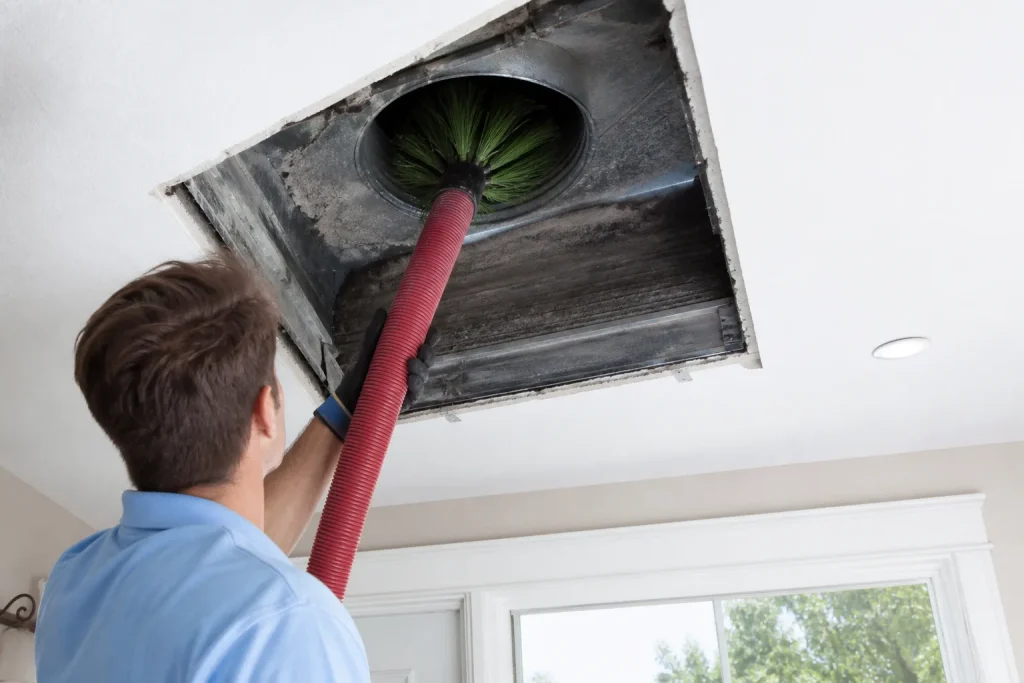
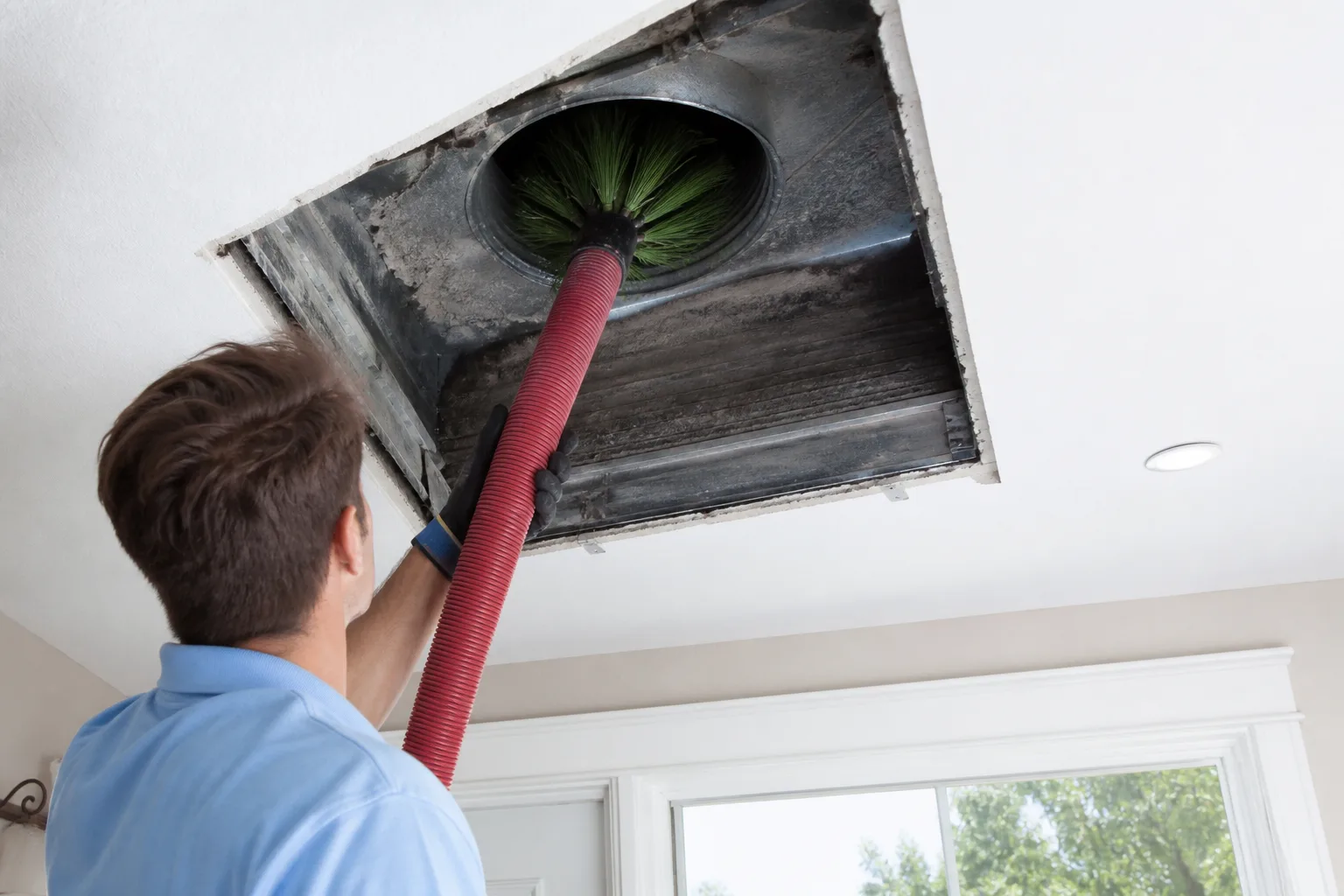
Emergency Air Duct Cleaning Near Me: What Chicago Homeowners Should Do First
Most situations Chicago homeowners call “duct emergencies” require a specific sequence of steps before cleaning adds any value. Shut down your HVAC system first, document what you see with photos, and call the right specialist - restoration for water damage, an HVAC technician for electrical or mechanical failure, or mold remediation for visible fungal growth - before scheduling duct cleaning. If you’re unsure which applies, call Bellows Air Duct & Vent Co. of Chicago home at (877) 502-3903 and we’ll walk you through it.
If you smell smoke in your vents and the first call you make is to a duct cleaning company, you may be cleaning ducts that are about to be replaced. We’ve been called to homes in Lincoln Park and Oak Park where homeowners paid for same-day cleaning after a small kitchen fire, only to have their insurance adjuster total the ductwork a week later. The cleaning didn’t hurt anything, but it didn’t help either - and it certainly wasn’t cheap. Here’s how to avoid that.
Is This Actually a Duct Emergency?
True emergencies involve active threats to health, safety, or structural integrity. Urgent problems need fast attention but won’t get worse in 24 hours. Knowing the difference protects your wallet.
True emergencies - act now:
- Smoke or chemical fumes actively circulating through living spaces
- Water actively flowing into ductwork from a burst pipe or roof leak
- Electrical burning smell from the air handler with the system running
- Visible mold combined with an immunocompromised resident
Urgent but schedulable:
- Stale odor that appeared gradually over weeks
- Reduced airflow in one or two rooms
- Dust accumulation around registers after renovation
- Musty smell following a resolved humidity problem
In our 42 years around Chicago, we’ve found that maybe one in ten after-hours calls is a genuine emergency by this definition. The rest are anxious homeowners who’ve been sold urgency by a competitor’s ad. There’s no shame in that - but there is a better way to handle it.
The Right Sequence for Post-Fire, Post-Flood, and Mold Scenarios
Each scenario has a correct first call. Get the order wrong and you’re paying to clean what you’ll soon replace, or worse, spreading contamination.
After a fire - even a small one:
- Call your insurance adjuster first. They’ll document the loss and may require specific restoration contractors.
- Have a fire restoration company assess the HVAC system. Smoke particles are acidic and can corrode metal; if the fire was in the basement or near a return, the entire system may need restoration-level cleaning or replacement.
- Only after restoration clears the system should you schedule Air Duct Cleaning in Chicago. We use Nikro and Abatement Technologies equipment, but even the best tools can’t fix ductwork that’s structurally compromised by heat or smoke.
After water intrusion:
- Stop the water source and call a water restoration company. They’ll extract standing water and set drying equipment.
- Have an HVAC technician inspect the air handler, blower motor, and electrical components. Water and electricity don’t mix, and a wet blower can short-cycle your entire system.
- Once the system is dry and mechanically sound, then schedule duct cleaning. Cleaning wet ducts traps moisture and feeds mold.
Visible mold discovery:
- Do not run the HVAC. Moving air spreads spores.
- Call a mold remediation specialist for testing and containment. They’ll determine if the mold is surface-only or systemic.
- After remediation passes clearance testing, we can clean and sanitize the ductwork with proper equipment. In Chicago’s older housing stock - think bungalows in Portage Park or two-flats in Bridgeport - we’ve seen mold return within months when remediation was skipped and only ducts were cleaned.
What Chicago Homeowners Can Do in the First Two Hours
You don’t need a technician on-site immediately to protect your home. These steps are safe, effective, and buy you time to make the right calls.
Shut down the system. Flip the breaker to your furnace or air handler, not just the thermostat. In Chicago’s climate, this means accepting some discomfort - but running a compromised system spreads whatever’s wrong.
Document everything. Photos with timestamps, written notes on when you first noticed the problem, and any recent events (renovation, weather, appliance failure). Your insurance company and any contractor will ask for this. We once helped a homeowner in Ravenswood prove that a contractor’s sawdust caused their airflow issues - the photos saved them a disputed claim.
Prevent cross-contamination. Close doors between affected and unaffected areas. Cover registers with plastic if you suspect mold or soot. Don’t use your vacuum - household vacuums expel fine particles through the exhaust.
Check your filters. A clogged filter can mimic an emergency. If it’s blackened or waterlogged, that’s diagnostic information, not a solution. Don’t just swap it and restart the system.
When to call a pro: If you smell gas, see sparks, or the breaker trips repeatedly, call the gas company or an electrician. Those aren’t duct problems, and no duct cleaning company should touch them.
Related services in Chicago: HVAC Cleaning in Chicago | Dryer Vent Cleaning in Chicago
Why “Emergency Same-Day” Duct Cleaning Ads Are Rarely Real Emergency Services
Search “emergency air duct cleaning near me Chicago” and you’ll find plenty of companies promising same-day or 24/7 response. Here’s what that actually means, and how to tell the difference.
Most “same-day” offers are standard scheduling with overtime pricing. The technician arrives in a personal vehicle, runs a basic vacuum, and leaves. There’s no after-hours supervisor, no specialized equipment for fire or water damage, and no protocol for coordinating with your insurance or restoration contractor.
A legitimate rapid-response process looks different:
- A live person answers the phone, 24 hours a day - not an app, not a voicemail promising a callback
- They ask diagnostic questions to determine if duct cleaning is even appropriate yet
- They can coordinate with or refer to restoration, HVAC, or remediation specialists
- The technician arrives in a marked vehicle with professional-grade equipment from recognized manufacturers like Honeywell or Aprilaire, not a shop-vac in a trunk
- Pricing is discussed before anyone dispatches - no “we’ll see when we get there”
At Bellows, our phones are answered by a live person around the clock. If your situation genuinely needs a restoration company first, we’ll tell you. We’ve turned down same-day jobs in Hyde Park and Logan Square because the homeowner needed water extraction first, and we’d rather they spend money on the right service than our wrong one. That’s the square deal.
What happens when you call
- 1
A real person answersNo phone trees - you reach a local pro.
- 2
You get an upfront price rangeHonest numbers before anyone is dispatched.
- 3
A background-checked tech heads outLicensed & insured, dispatched right away.
- 4
You approve before work beginsNothing starts until you say go.
Questions to Ask During an After-Hours Call
Urgency is a powerful sales tactic. These questions separate companies with real emergency capacity from those using your anxiety to book a standard job at premium rates.
“What happens if you find this isn’t a duct cleaning issue?”
A legitimate company has a clear answer: they’ll stop, explain why, and refer you appropriately. A bait-and-switch operator will find a way to bill you anyway.
“What equipment do you bring for fire damage versus standard cleaning?”
Fire restoration requires HEPA air scrubbers, negative air machines, and often soda blasting or dry ice cleaning - not the same Rotobrush setup used for routine maintenance. If they can’t describe the difference, they don’t handle real emergencies.
“Who do I speak with if the job needs to be redone?”
A company with real accountability has a named process. Our 90-Day Done Right Promise means we return at no charge, no paperwork, no arguing. Ask if they guarantee their work in writing, not just verbally.
“Is the price you’re quoting the full price, including after-hours fees?”
Get the number on the phone, not an estimate range. Our no-hassle upfront pricing means the number we say is the number on the invoice. If they hedge, expect a higher number at the door.
“How do you verify the cleaning worked?”
Camera inspection before and after every job is the only honest answer. We show you the footage. Claims without proof are just claims.
The Bottom Line
Chicago’s older housing stock, seasonal extremes, and dense neighborhoods create genuine duct emergencies - but not as often as advertised. The right first response is usually shutting down your system, documenting conditions, and calling the right specialist before the duct cleaner. When duct cleaning is the right next step, it should be verifiable, fairly priced, and backed by a guarantee that doesn’t require a fight to enforce.
Key takeaways:
- Shut off your HVAC at the breaker first - running a compromised system makes everything worse
- Fire, flood, and mold each have a correct first call before duct cleaning adds value
- Document with photos and timestamps before any contractor arrives
- Most “emergency” duct cleaning ads are standard service with urgency pricing
- Ask about equipment, guarantees, and upfront pricing before booking after-hours
If you’re in Chicago and facing a duct situation you’re not sure how to categorize, call Bellows Air Duct & Vent Co. of Chicago at (877) 502-3903. We’ll ask the right questions, tell you honestly if we’re the right call or not, and if we are, we’ll show up when we say with one honest price shown before we start. That’s how we’ve operated since 1984, and it’s not changing now.
Frequently Asked Questions
Emergency or same-day duct cleaning in Chicago typically runs $400-$800 for a standard residential system, with after-hours fees adding $100-$250. The total depends on system size, accessibility, and whether contamination requires specialized equipment. At Bellows, we disclose all pricing before dispatch - the number on the phone is the number on the invoice. Call (877) 502-3903 for an exact quote; estimates are free.
No. Household vacuums and brushes can’t reach the full duct run, and DIY attempts often force debris deeper or damage flexible ductwork. After fire or flood, the risk of spreading soot, mold spores, or contaminated water outweighs any potential savings. In Chicago’s climate, where humidity swings are extreme, improper cleaning can trap moisture and accelerate mold growth. We recommend a trained professional with camera inspection capability and proper containment equipment.
True same-day response is possible but limited to companies with dedicated after-hours staff, not just on-call technicians. In our experience serving Chicago since 2013, legitimate rapid response means a live person answers, asks diagnostic questions, and dispatches only if duct cleaning is appropriate. Most “24/7” ads connect to scheduling apps or voicemail callbacks within 24 hours. Ask specifically: “If I call at 10 PM, who answers and when does a technician arrive?”
For isolated damage to a few feet of duct, repair and sealing is usually more economical. For widespread smoke exposure, water saturation in fiberglass-lined ducts, or mold in porous materials, replacement is often more cost-effective long-term. In Chicago’s vintage housing, we’ve seen homeowners in neighborhoods like Andersonville and Bronzeville save money by replacing compromised sections with modern, sealed ductwork rather than repeated cleaning attempts. A camera inspection reveals which applies. Call (877) 502-3903 and we’ll assess honestly - no scare tactics, no bait pricing.
Written by the team at Bellows Air Duct & Vent Co. of Chicago, serving Chicago since 2013.
Need Air Duct Cleaning Help?
Call Bellows Air Duct & Vent Co. of Chicago - licensed & insured, here with fast after-hours help in Chicago.
(877) 502-3903